 EN
EN
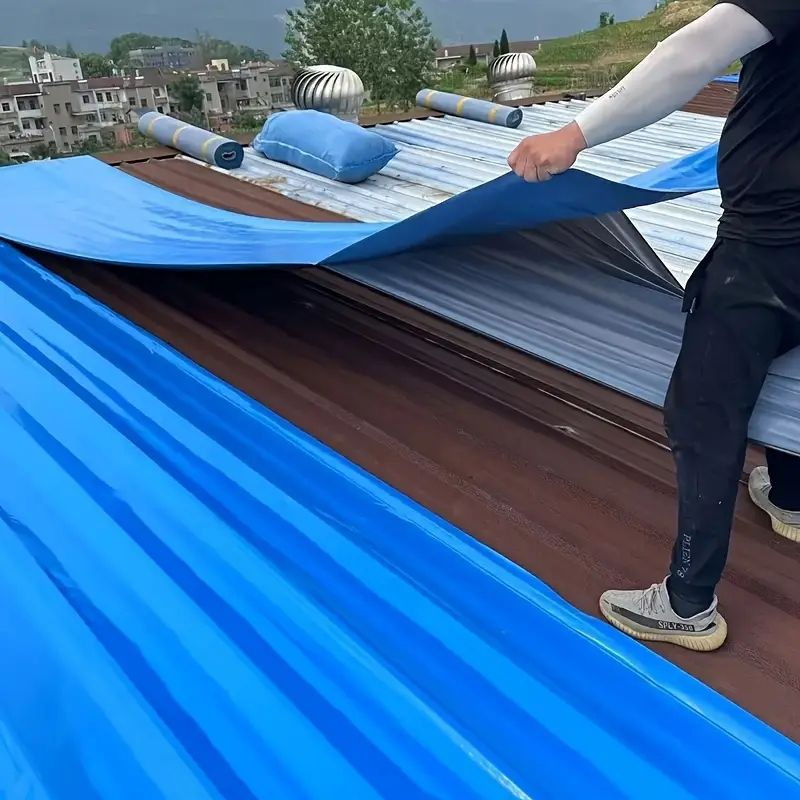
Why Waterproofing Membrane Quality Is the First Line of Structural Defense
Mechanisms: How substandard membranes fail under hydrostatic pressure and thermal cycling
Poor quality waterproofing membranes tend to form tiny cracks when exposed to constant water pressure, which lets moisture seep into building joints over time. When these materials go through repeated temperature changes, cheaper polymer blends start losing their ability to stretch and contract properly. They shrink when it gets cold and swell when temperatures rise, eventually peeling away from whatever surface they're applied to. Testing shows that membranes retaining less than half their original stretch capability after accelerated aging tests (according to industry standards) fail about three times quicker in areas where freezing and thawing cycles occur regularly. What makes this problem worse is that even small amounts of moisture can move through tiny spaces in the material, setting off corrosion processes in steel reinforcements well before anyone notices any actual leaks developing.
Critical gap: Tensile strength & long-term adhesion – why ASTM D412 alone doesn’t predict field performance
The ASTM D412 standard looks at tensile strength measurements but falls short when it comes to mimicking actual adhesion challenges faced in real world conditions with repeated stresses. According to field research published by NIST last year, even materials that pass laboratory tensile testing end up losing about 38 percent of their adhesive properties within just five years. Why? Main culprits include plasticizer migration issues, chemical breakdown from alkaline environments, and structural movements that go way beyond what static tests can capture. Since the ASTM D412 method completely ignores factors like ultraviolet light exposure, water vapor movement through materials, and the natural shrinking of substrates over time these are all major contributors to failure in real installations this standard simply isn't very good at predicting how well materials will perform over extended periods in practical applications.
Waterproofing Membrane Degradation Pathways and Their Lifespan Impact
Knowing how waterproofing membranes break down when exposed to environmental stress helps figure out how long they'll actually last before needing replacement. There are basically three main ways these materials fail over time. First up we have UV radiation which literally eats away at the polymer chains, especially noticeable in those newer low-VOC membranes that manufacturers tout as being eco friendly. Then there's the issue of plasticizers. These substances get mixed into the material to make it more flexible, but they slowly work their way out over years of service, leaving the membrane brittle and prone to cracking. And finally there's hydrolysis, a fancy term for what happens when moisture gets into the polymer bonds. Research indicates things get really bad when humidity stays above 70%, with some tests suggesting degradation speeds up by about 40% in those conditions.
UV exposure, plasticizer leaching, and hydrolysis: Accelerated aging in low-VOC polymer-modified membranes
Accelerated aging tests reveal distinct vulnerabilities in modern membranes:
- UV degradation: Causes 15–25% faster tensile strength loss in non-UV-stabilized formulations, leading to surface crazing that compromises seal integrity.
- Plasticizer migration: Reduces elongation at break by up to 50% within 5–7 years in membranes with high phthalate content (>20% phr).
- Hydrolysis rates: Triple in ester-based polymers when pH fluctuates below 4 or above 10.
Low-VOC membranes often trade durability for environmental compliance. For example, bio-based plasticizers migrate 30% faster than traditional phthalates under thermal cycling—reducing service life without corresponding gains in field resilience.
Field validation: ISO 15686-1 service life modeling vs. 15-year real-world elongation retention (ASTM D5747)
ISO 15686-1 provides theoretical service life predictions, but real-world ASTM D5747 tracking exposes significant discrepancies—especially in aggressive climates. Mediterranean field data shows:
| Performance Metric | ISO 15686-1 Prediction | 15-Year Field Data |
|---|---|---|
| Elongation retention | ≥70% | 48–52% |
| Crack resistance (cycles) | 3,500 | ≈1,800 |
| Adhesion strength loss | 20% | 35–40% |
This 20–30% performance gap reflects how modeling underestimates synergistic degradation—such as combined UV exposure and thermal stress. Premature failures most frequently occur at seams and penetrations, where localized stresses concentrate and accelerated aging protocols do not account for substrate movement or chemical contamination common on active job sites.
Cascade Effects: From Membrane Failure to Irreversible Structural Damage
Chloride-driven corrosion of rebar: Electrochemical acceleration due to membrane-compromised seepage
Waterproofing membranes don't last forever, and when they start to break down, even small cracks let moisture containing chlorides seep into the concrete. What happens next is pretty damaging stuff at the molecular level where the rebar sits. The corrosion process speeds up dramatically, sometimes tripling or even quintupling normal rates. As iron turns to rust, it expands inside the concrete matrix creating pressures that can hit around 3,500 psi or more. That kind of force is enough to crack the surrounding material from within. The worst part? Structures lose their strength long before anyone notices surface cracks forming, making these hidden failures particularly dangerous for building safety over time.
Secondary deterioration: Spalling, mold proliferation, and loss of thermal envelope integrity
Following initial reinforcement corrosion, structural decay manifests through three interrelated pathways:
- Spalling, caused by corroded rebar displacing concrete cover, creates falling hazards and accelerates further moisture ingress.
- Mold proliferation, thriving in persistent damp cavities, degrades indoor air quality and poses occupant health risks.
- Thermal envelope compromise, as continuous moisture intrusion reduces insulation R-values by up to 40%, increasing energy demand and condensation risk.
Together, these effects systematically erode both structural safety and building performance. Industry analyses confirm remediation costs at this stage typically exceed the original waterproofing investment by 15-fold—underscoring why membrane quality is not a cost item, but the foundational element of structural defense.
FAQ
What causes waterproofing membrane failure?
Waterproofing membranes can fail due to exposure to UV radiation, temperature fluctuations, plasticizer migration, hydrolysis, and corrosion. Substandard materials are prone to cracking, losing adhesion, and shrinking under environmental stress.
Why is tensile strength not enough for predicting membrane performance?
Tensile strength alone fails to address real-world conditions and doesn't account for environmental factors like UV exposure, pH variations, or substrate movements, leading to misleading predictions about material longevity.
How does membrane failure lead to structural damage?
Small cracks in compromised membranes allow moisture penetration, resulting in accelerated corrosion of steel reinforcements. Such damage can cause spalling, mold growth, and compromised insulation, which together undermine structural integrity.
Why do low-VOC membranes degrade faster?
Low-VOC membranes often sacrifice durability for environmental compliance; their modified formulations are more susceptible to UV degradation, plasticizer leaching, and hydrolysis under stress.