 EN
EN
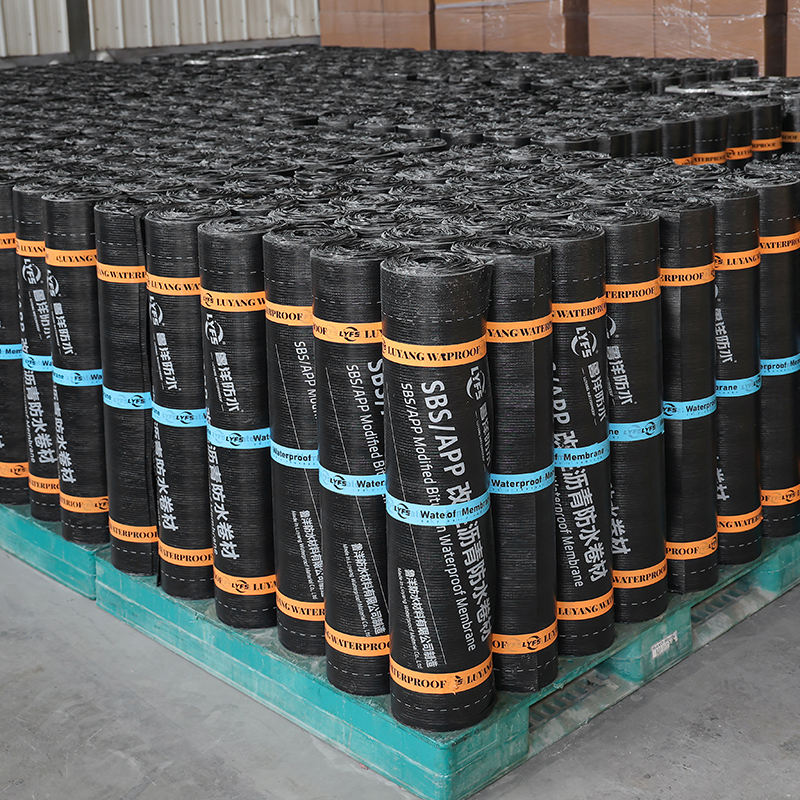
Match Waterproofing Membrane Type to Application and Hydrostatic Conditions
Above-Grade vs. Below-Grade Waterproofing Membrane Requirements
Above-grade applications—such as roofs and balconies—are exposed to UV radiation, thermal cycling, and intermittent water exposure but experience negligible hydrostatic pressure. Membranes here must prioritize UV stability, flexibility at low temperatures, and resistance to thermal expansion and contraction.
Below-grade installations—including foundations, basements, and parking structures—face sustained hydrostatic pressure, aggressive soil chemistry, and potential root or microbial attack. Industry standards (e.g., ASTM D4354, BS 8102) require certified below-grade membranes to resist 10–15 psi of continuous water pressure while maintaining integrity against sulfates, chlorides, and pH fluctuations (3–12). Root-resistant formulations meeting FLL or ISO 11071 are essential for green roof or landscaped plaza applications.
Liquid-Applied vs. Sheet-Based Waterproofing Membranes
Liquid-applied membranes cure into seamless, monolithic films—ideal for complex substrates with penetrations, irregular geometry, or fine cracks. They achieve near-total substrate adhesion (≥98%) and self-seal minor surface imperfections, though performance hinges on precise thickness control and ambient curing conditions.
Sheet-based membranes offer consistent thickness (1–4 mm), higher puncture and abrasion resistance, and faster coverage over large, planar surfaces. Their performance depends heavily on seam quality; welded or taped joints must meet minimum peel and shear strength thresholds per ASTM D1876 and D624.
| Property | Liquid-Applied | Sheet-Based |
|---|---|---|
| Installation Speed | Moderate (requires cure time) | Fast (immediate coverage) |
| Seam Integrity | Seamless | Seams require welding or adhesive bonding |
| Substrate Conformity | Excellent (flows into cracks, contours to detail) | Moderate (best on flat, prepared surfaces) |
Installation Method Comparison: Torch-Applied, Self-Adhesive, and Spray-Applied Systems
- Torch-applied systems deliver robust bond strength (≥50 psi per ASTM D903) and excellent interfacial fusion—ideal for large, open areas like plaza decks or podium slabs. However, they demand certified applicators and strict fire safety protocols.
- Self-adhesive membranes eliminate open flame and simplify installation in confined or sensitive spaces (e.g., occupied buildings, underground garages). Their initial tack is temperature-sensitive; optimal application occurs between 5°C and 35°C.
- Spray-applied systems enable rapid vertical and overhead coverage (300–500 sq ft/hour), making them highly effective for tall façades or tunnel linings. Success requires calibrated equipment, trained crews, and environmental controls to manage wind, humidity, and substrate moisture.
Selection should align with site constraints: torch methods suit expansive, accessible areas; spray systems excel where speed and access are limiting; self-adhesive options balance safety, simplicity, and reliability across mid-scale projects.
Assess Critical Performance Properties of the Waterproofing Membrane
Elongation, Tear Resistance, and Chemical Stability for Long-Term Integrity
Elongation alone is a poor predictor of field performance. What matters most is crack bridging—the membrane’s ability to maintain watertight continuity over actively moving or settling substrates. This demands a synergistic balance of:
- Tear resistance ≥50 N/mm (per ASTM D624) to survive backfilling, compaction, and mechanical stress;
- Chemical stability across pH 3–12 and resistance to chlorides, sulfates, and organic solvents commonly found in soils and groundwater;
- Dynamic flexibility, verified across thermal cycles from –20°C to 60°C (per ASTM D5329);
- Hydrostatic resistance—premium systems withstand up to 7 bars (≈100 psi), nearly double the 3–4 bar threshold of standard membranes.
Third-party validation of crack-bridging capacity—especially under cyclic movement matching expected structural tolerances—is non-negotiable for high-risk or long-life assets.
Substrate Compatibility: Cured vs. Green Concrete, Steel Protection, and Vertical Adhesion
Adhesion failure accounts for 67% of waterproofing breaches (International Waterproofing Association, 2023). Reliable bonding begins with substrate-specific compatibility:
- Green concrete (≤7 days old) requires moisture-tolerant primers and membranes that cure without trapping bleed water—critical to prevent blistering or delamination.
- Vertical and overhead surfaces demand shear adhesion >250 kPa (per EN 1542) to resist gravitational sag during and after application.
- Steel substrates, particularly in tunnels or marine environments, need non-corrosive, cathodically compatible formulations compliant with ISO 12944 for corrosion protection.
For mission-critical infrastructure, specify adhesion values exceeding anticipated structural movement by ≥150%, and vapor transmission rates <0.01 perm (ASTM E96) to prevent interstitial condensation and coating degradation.
Align Waterproofing Membrane Selection with Project Scale and Lifecycle Demands
Project scale directly shapes technical and economic requirements. Small-scale residential builds—like single-family homes—often succeed with cost-effective, code-compliant self-adhesive or liquid-applied membranes. These provide adequate durability for 15–20 years with manageable maintenance expectations.
In contrast, large-scale infrastructure—including high-rises, transit hubs, and subterranean utilities—demands engineered, multi-layered systems validated for extreme conditions: seismic displacement, decades-long hydrostatic loading, and repeated thermal cycling. Certifications such as ICC-ES AC376 or ETA-13/0187 provide assurance of performance under real-world stressors.
Lifecycle economics further sharpen selection criteria. While budget-driven projects may emphasize upfront cost, facilities requiring uninterrupted operation—hospitals, data centers, or emergency response facilities—justify premium membranes with ≤0.5% annual maintenance frequency and third-party verification of elongation retention (>80% after ASTM D5774 accelerated aging). As Ponemon Institute (2023) reports, unmitigated membrane failure in critical infrastructure can trigger cascading structural damage exceeding $740,000—not including downtime or remediation delays.
The optimal solution emerges only when regulatory compliance, total cost of ownership, environmental exposure, and asset service life are evaluated holistically—grounded in authoritative test data and field-proven performance.
FAQ
What is the difference between liquid-applied and sheet-based waterproofing membranes?
Liquid-applied membranes conform well to complex surfaces and provide seamless coverage, ideal for penetrations and irregular geometries, while sheet-based membranes ensure consistent thickness and better puncture resistance, suitable for flat, prepared substrates.
Are there specific requirements for waterproofing below-grade structures?
Yes, below-grade waterproofing requires membranes that resist continuous hydrostatic pressure, tolerate aggressive chemicals, and withstand root or microbial attacks. Certified formulations are essential for long-term durability.
What is crack bridging, and why is it essential?
Crack bridging refers to a membrane's ability to maintain watertight continuity over moving or settling substrates. It ensures the membrane remains functional even under structural shifts.
Which installation method is best for confined spaces?
Self-adhesive membranes work best in confined spaces, as they eliminate the need for open flames, ensuring safety and ease of installation.
What factors influence waterproofing membrane longevity?
Key factors include material resistance to UV radiation, chemicals, hydrostatic pressure, and its ability to adapt to thermal and structural movements.